StudyAgent Launches AI Humanizer to Improve Natural Tone of Academic Writing
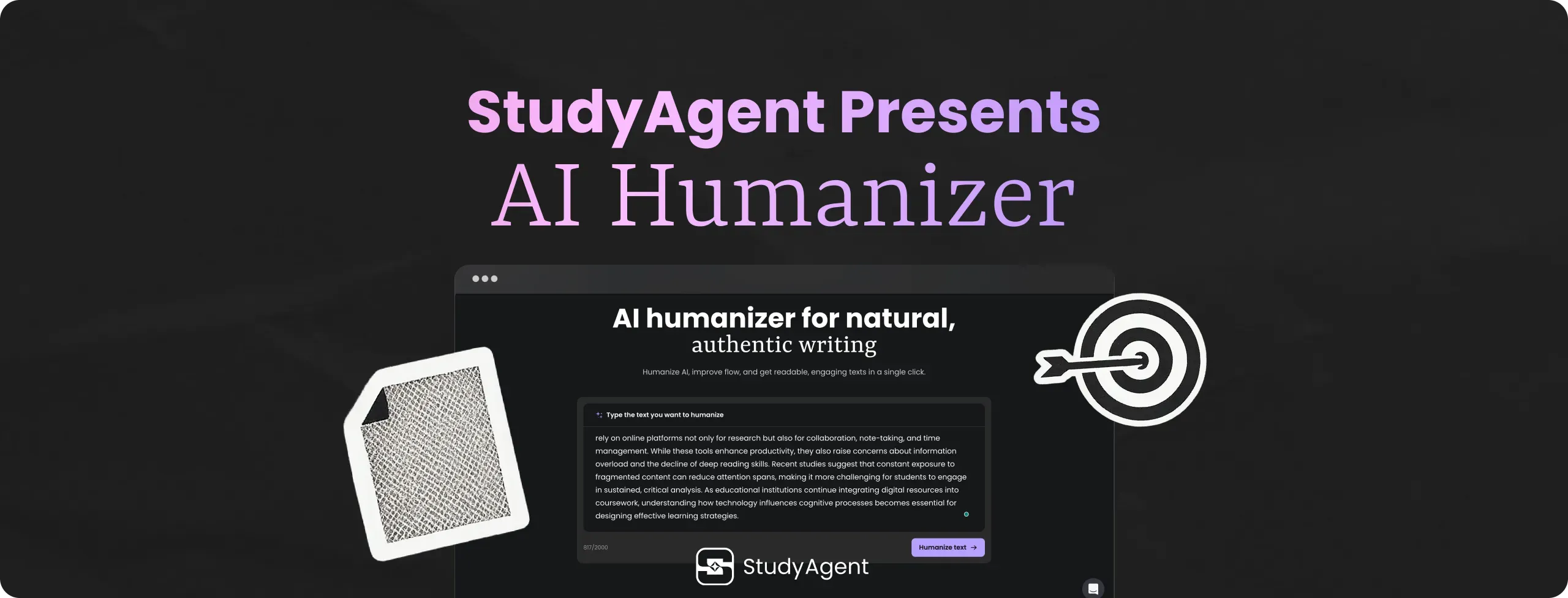


Delaware, USA — November 15, 2025 — StudyAgent announced the release of AI Humanizer, a feature intended to help students convert mechanically phrased or overly polished drafts into writing with more natural rhythm and tone. The tool analyzes text for phrasing that reads as machine-generated and rewrites passages to preserve original meaning while improving flow and voice.
AI Humanizer targets common issues that arise when drafts appear overly formal, repetitive, or flat after rapid editing or AI-assisted generation. Key capabilities include detection of machine-like phrasing, reduction of repetitive wording, adjustments tuned to academic writing conventions, and preservation of the author’s original ideas and intent.
The feature is offered in both freemium and premium plans. The freemium option provides the same core functionality with limited daily credits, while the premium tier supports larger documents and extended usage without daily limits. The tool accepts pasted text or uploaded files and returns a refined version within seconds, with options for additional refinements if desired.
The launch follows observations that many students produce technically correct work that nevertheless lacks natural cadence or a distinct authorial voice. AI Humanizer is positioned to assist with revision workflows by reducing the manual effort required to rephrase and polish text for clarity and tone. The tool is applicable to essays, reports, and research papers and is intended as a drafting and revision aid rather than a source of substantive content.
“AI Humanizer is designed to restore the human voice to academic drafts while preserving the author’s original thinking. The feature addresses a specific revision need by focusing on pacing and phrasing rather than changing core ideas,” said Kateryna Bykova, Director of Content Marketing, StudyAgent.
AI Humanizer is available now on the StudyAgent platform under the AI tools section. Documentation and a short how-to guide are published on the StudyAgent blog.